Prolonged restriction triggers survival mode. When your body isn’t receiving enough energy, it adapts to protect you. These adaptations include decreasing energy burned through the suppression of body systems. Although protective at baseline, in the long-term, these changes have real consequences to our health and wellbeing.
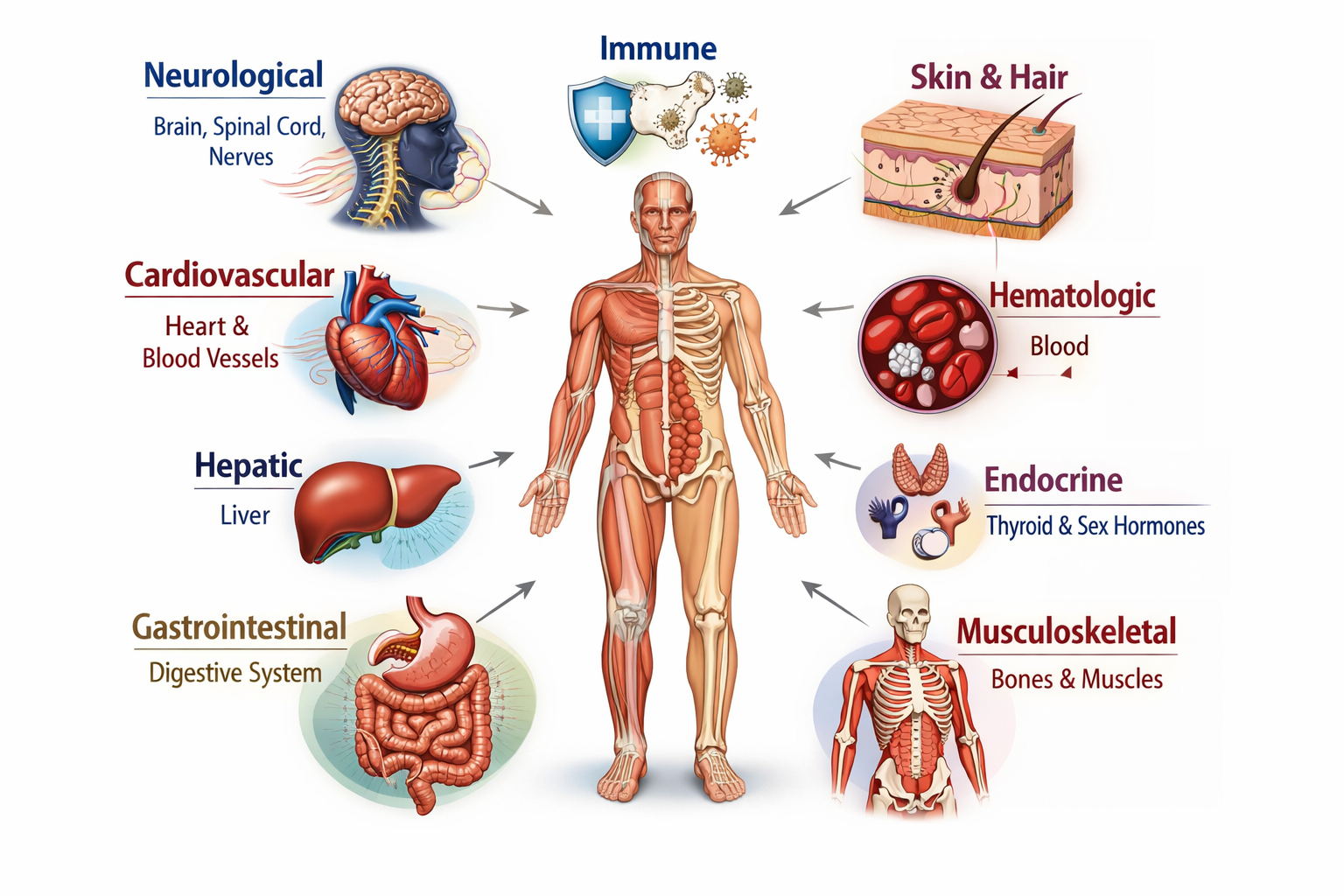
For example, some people might experience:
- Breakdown of muscle, adipose, and bone for energy, protein, and nutrients
- If starvation occurs during childhood and adolescence, it can lead to developmental delays and stunting
- Fatigue
- Abnormal heart function, and cardiac atrophy (heart shrinks!)
- Negative effects on cognitive ability including focus and memory, mental health, social skills and educational attainment
- Skin becomes fragile and may bruise or tear easily
- Hair becomes thin, brittle, and may fall out
- Delayed gastric emptying, reduced enzyme production, altered motility during digestion
- Reduced temperature regulation/temperature intolerance
- Poor blood flow
- Hormonal imbalances which can result in metabolic disruptions, infertility, osteoporosis, and delayed puberty
Adequate Nutrition For Recovery
Energy Intake
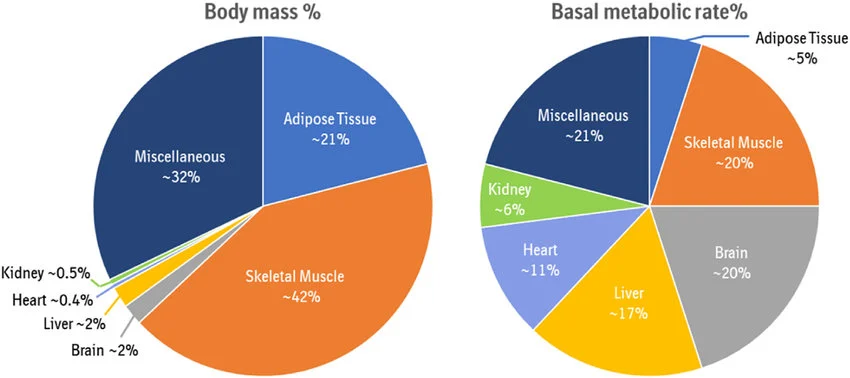
Our bodies need calories, or energy, for vital processes to occur. Energy use in the body can be broken down into three subsets: basal expenditure (at rest; BMR), the thermic effect of food (energy used for digestion, absorption and metabolism of food), and physical activity (intentional and unintentional).
Energy needs differ for each person and depend on numerous factors including the degree of metabolic suppression, growth needs, activity levels, and individual metabolic characteristics.
Hypermetabolism
During recovery, your body needs energy to heal. In addition to meeting your everyday needs, your body is working hard to repair tissues, restore hormone balance, rebuild bone and muscle, support organ function, and normalize metabolism.
Some people experience hypermetabolism, a temporary phase in which the body burns energy much faster than expected. During this time, your energy needs may be significantly higher than originally anticipated. It is not uncommon for people experiencing hypermetabolism to require substantially more food than they expect in order to support healing.
Consistently meeting energy needs helps your body to eventually return to its baseline.
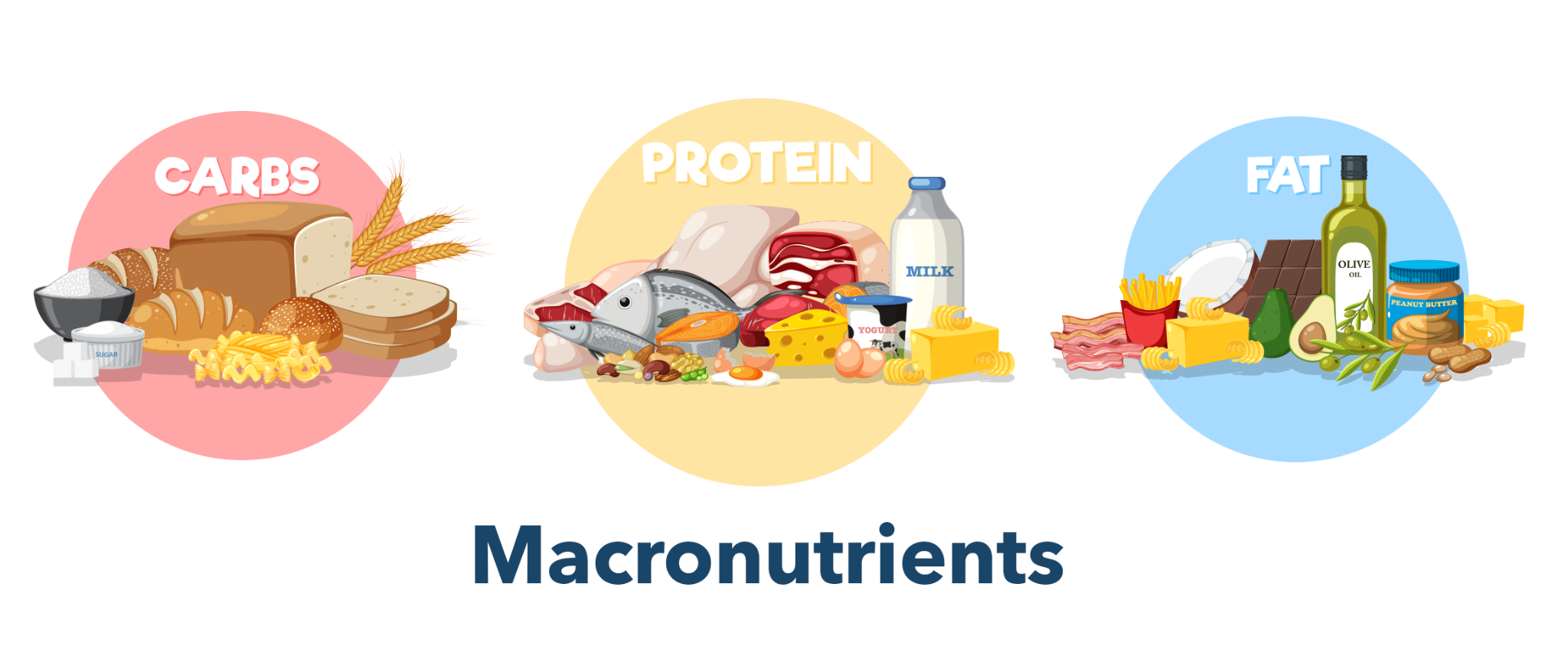
The Role of Macronutrients in the Body
Carbohydrates
- Energy
- Storage form of energy known as glycogen
- Surround your muscles and ligaments with cushion and lubrication to the joints, and give mucous its thickness
- Regulate bowels and cholesterol levels
Proteins
- Building materials for growth and maintenance
- Muscle, tendon, and ligament creation
- Enzymes which help you digest food
- Fluid balance
- Transports nutrients throughout the body
- Antibodies
- Vision
- Can be used for energy if needed
Fats
- Energy
- Our brain and nerve tissue is mostly made up of fat
- Hormone production
- Insulation- protects our organs
- Temperature regulation- keeping your warm
- Provides structure to our cell membranes
- Helps us digest and absorb nutrients
Consistent Meal and Snack Intake
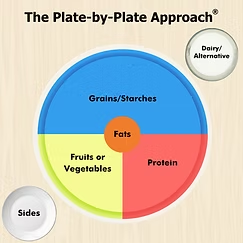
To improve metabolic suppression, bodies need regular, predictable nutrition. Consistent adequate intake signals to the body that restriction has ended and it can now start to function normally again. Everyone has different needs, however, for many people an adequate day of eating may look like:
- 3 meals per day containing all the food groups: starch, fat, protein, dairy, and produce
- 2-3 snacks per day
- Eating every 3-4 hours
Often, this meal and snack pattern doesn’t feel intuitive at first. Hunger and satiety signaling can be altered due to eating disorder behaviors and subsequent metabolic adaptations. As a result, many people benefit from meal plans to reliably eat enough. Meal plans look different for everyone, and can be tailored by your dietitian to meet your specific needs.
Takeaway:
Recovery happens through consistent, adequate nourishment over time.
When your body is regularly nourished, it can return to functioning as it was designed. While this healing process can sometimes feel physically or emotionally uncomfortable, these changes are often signs that your body is recovering.
Healing doesn’t happen overnight, and it also doesn’t have to happen on your own. Working with a full team of providers, including a dietitian, can help you build a sustainable plan, navigate challenges that arise during recovery, and make sure your body is receiving the support it needs.
References:
Crosbie, Casey, and Wendy Sterling. The Plate-by-Plate Approach [illustration]. The Plate-by-Plate Approach, https://www.platebyplateapproach.com/. Accessed 22 July 2026.
Espinosa-Salas S, Gonzalez-Arias M. Nutrition: Micronutrient Intake, Imbalances, and Interventions. [Updated 2023 Sep 21]. In: StatPearls [Internet]. Treasure Island (FL): StatPearls Publishing; 2026 Jan-. Available from: https://www.ncbi.nlm.nih.gov/books/NBK597352/
Gaudiani, J. L. (2019). Sick enough: A guide to the medical complications of eating disorders. New York, NY: Routledge.
Hanachi, M., Dicembre, M., Rives-Lange, C., Ropers, J., Bemer, P., Zazzo, J., . . . Melchior, J. (2019). Micronutrients Deficiencies in 374 Severely Malnourished Anorexia Nervosa Inpatients. Nutrients, 11(4), 792. doi:10.3390/nu11040792
Müller, M. J., Wang, Z., Heymsfield, S. B., Schautz, B., & Bosy-Westphal, A. (2013). Advances in the understanding of specific metabolic rates of major organs and tissues in humans. Current opinion in clinical nutrition and metabolic care, 16(5), 501–508. https://doi.org/10.1097/MCO.0b013e328363bdf9
Saunders, J., & Smith, T. (2010). Malnutrition: Causes and consequences. Clinical Medicine, 10(6), 624-627. doi:10.7861/clinmedicine.10-6-624
Stipanuk, M. H., & Caudill, M. A. (2019). Biochemical, physiological, and molecular aspects of human nutrition. Missouri, Estados Unidos: Elsevier.